



















Navision (Microsoft Dynamics NAV) Procurement Integration
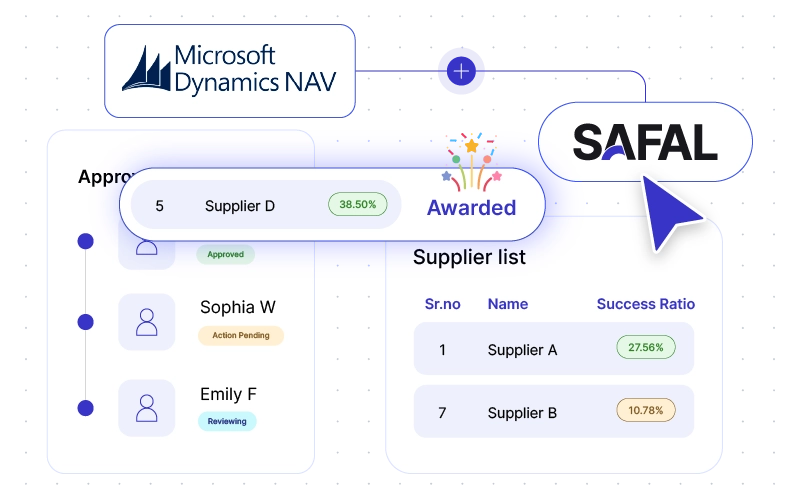






Extend Microsoft Dynamics NAV Beyond Core Purchasing Transactions
Microsoft Dynamics NAV remains an important ERP system in many established manufacturing, trading and multi-company environments. However, procurement teams may still manage sourcing events, supplier comparisons, negotiations, technical evaluations and multi-level approvals across spreadsheets, email or separate applications when Navision's native purchasing functions do not reflect the way the organization actually procures. This can leave finance with limited visibility of committed spend until a purchase order finally reaches Navision.
Microsoft has moved every Dynamics NAV version out of mainstream support and directs customers toward Dynamics 365 Business Central. Adding more custom C/AL code to Navision for procurement workarounds can deepen technical debt and widen the scope of what must be reviewed before any future migration, which raises the case for extending procurement around the ERP rather than inside it.
What is Navision Procurement Integration?
Navision procurement integration connects a procurement platform with Microsoft Dynamics NAV so procurement workflows such as sourcing, negotiation, requisitions, purchase orders and invoicing can be orchestrated through the procurement platform while relevant transactional and financial data remains synchronized with Navision. It follows the same approach used across SAFAL's ERP Integration architecture, including the dedicated SAP, Microsoft Dynamics and Oracle integration pages.
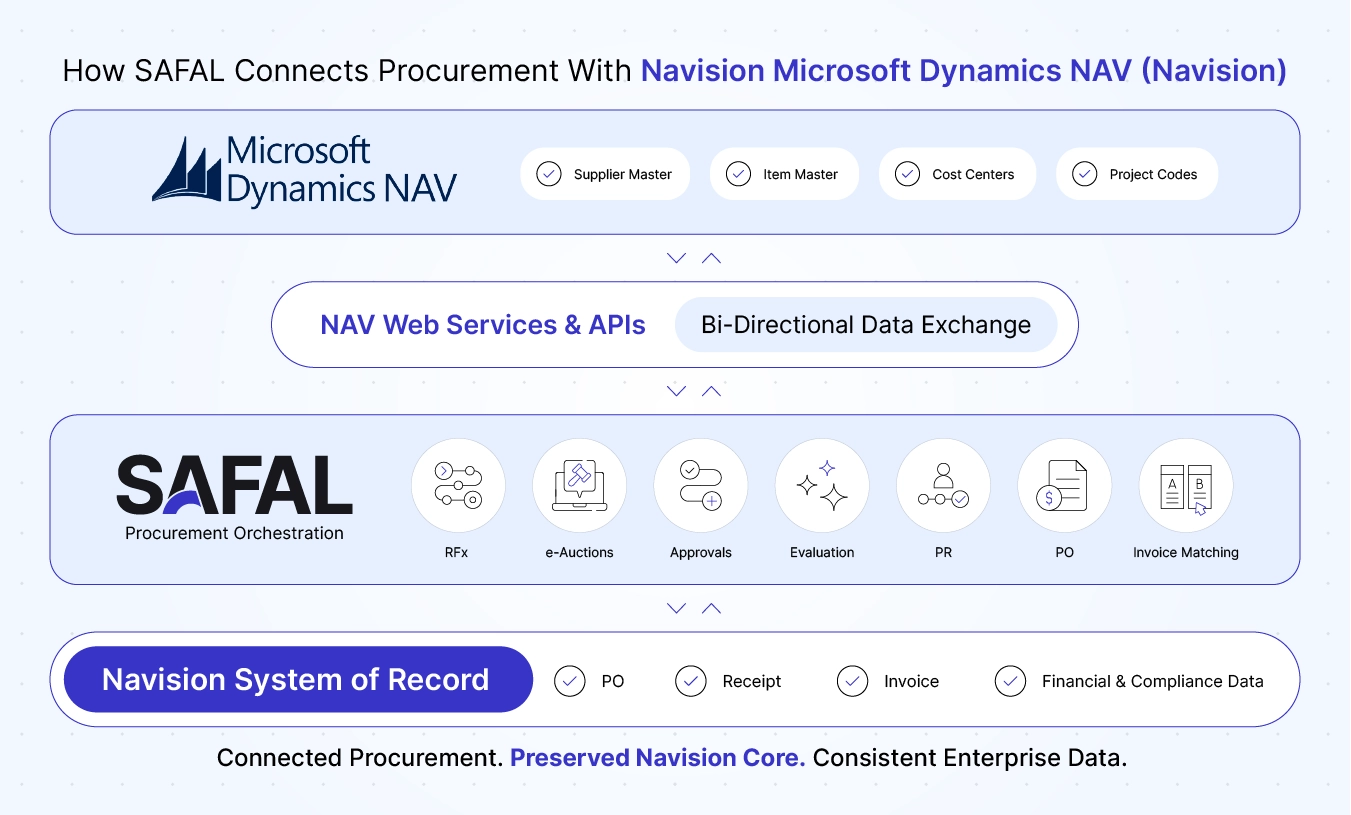
SAFAL supports Navision environments ranging from long-running on-premise installations to the final Dynamics NAV releases, connecting through NAV web services and APIs rather than embedding procurement logic as custom code inside Navision. This supports a side-by-side architecture that keeps the Navision core stable:



How SAFAL Integrates with Navision

Establish Navision Connectivity
- Supports legacy on-premise Navision and the final Dynamics NAV releases
- Uses NAV web services (SOAP and OData) and APIs instead of C/AL objects
- Active Directory integration for centralized authentication
- Configured per Navision company and database

Synchronize Master Data
- Supplier master data flows from Navision into SAFAL for sourcing and onboarding
- Item and pricing master data kept current across both systems
- Dimension and G/L account mapping configured per company
- Scheduled or real-time sync, depending on data volume

Run Procurement in SAFAL
- Structured RFx, e-Auctions, and negotiation events
- Multi-level, delegation-of-authority-based PR approvals
- Technical recommendation and comparative evaluation tools
- Complex project BOQs supported for EPC and manufacturing buyers

Post Transactions Back to Navision
- Automated PO creation, approval, and posting in Navision
- Receipt and invoice data synchronized for 2-way and 3-way matching
- Amendments and version history reflected on both sides
- Reduces manual data re-entry between SAFAL and Navision

Reconcile and Audit
- Exception alerts for mismatched or delayed postings
- Full digital audit trail across procurement and Navision companies
- Role-based access controls on every integration point
- Continuous monitoring across multi-company Navision landscapes
Key Capabilities






Benefits for Enterprise Procurement Teams
No Disruption to Existing Navision Workflows

Migration-Ready Architecture

Real-Time Financial Visibility

Faster Purchase Approval Cycles
Earlier Invoice Exception Detection

Modern Sourcing on a Legacy ERP
Why SAFAL Navision Integration
- Native Navision connectivity for seamless master, transaction, and financial data alignment
- Proven bi-directional integration across SAP and Oracle, applied to Navision using the same architecture
- Side-by-side integration avoids custom C/AL code and supports future ERP transitions
- Ensures accountability through controlled access, traceable transactions, and digital audit trails
- Phased implementation prioritizes procurement workflows based on Navision versions and integration complexity
- Active Directory integration enables centralized authentication across SAFAL and Navision
- ISO 27001-certified security governs every data exchange with Navision
Navision Deployment Scenarios SAFAL Integrates With
Legacy and Final-Release Navision (On-Premise)
- Bi-directional connectivity without core modification
- Ideal for established process organizations
- Version-specific connectivity and web services
Multi-Company, Multi-Database Navision Landscapes
- Company-specific field mapping and approval hierarchies
- Centralized procurement visibility across Navision companies
- Consistent master data governance across the landscape
Hybrid ERP
Landscapes
- Navision subsidiaries with SAP, Oracle or Dynamics
- One procurement platform across ERPs
- Group-wide spend visibility without ERP consolidation
Navision to Business Central Migration Programs
- Integration layer remains stable across the migration
- Uninterrupted procurement during ERP migration
- Less custom code to assess before migration
Use Cases

Multi-Company Manufacturing on Navision

Subsidiary Procurement in Hybrid ERP Groups

Navision to Business Central Migration Programs
EPC and Project-Based Procurement on Navision

Multi-Currency, Multi-Company Conglomerates
See How SAFAL Integrates With Your Navision Environment

If you’re ready to unlock efficiency, savings, and confidence in your procurement process, SAFAL is the partner you’ve been waiting for.
TKIL Industries Pvt Ltd.
(formerly thyssenkrupp Industries India Pvt Ltd.)